
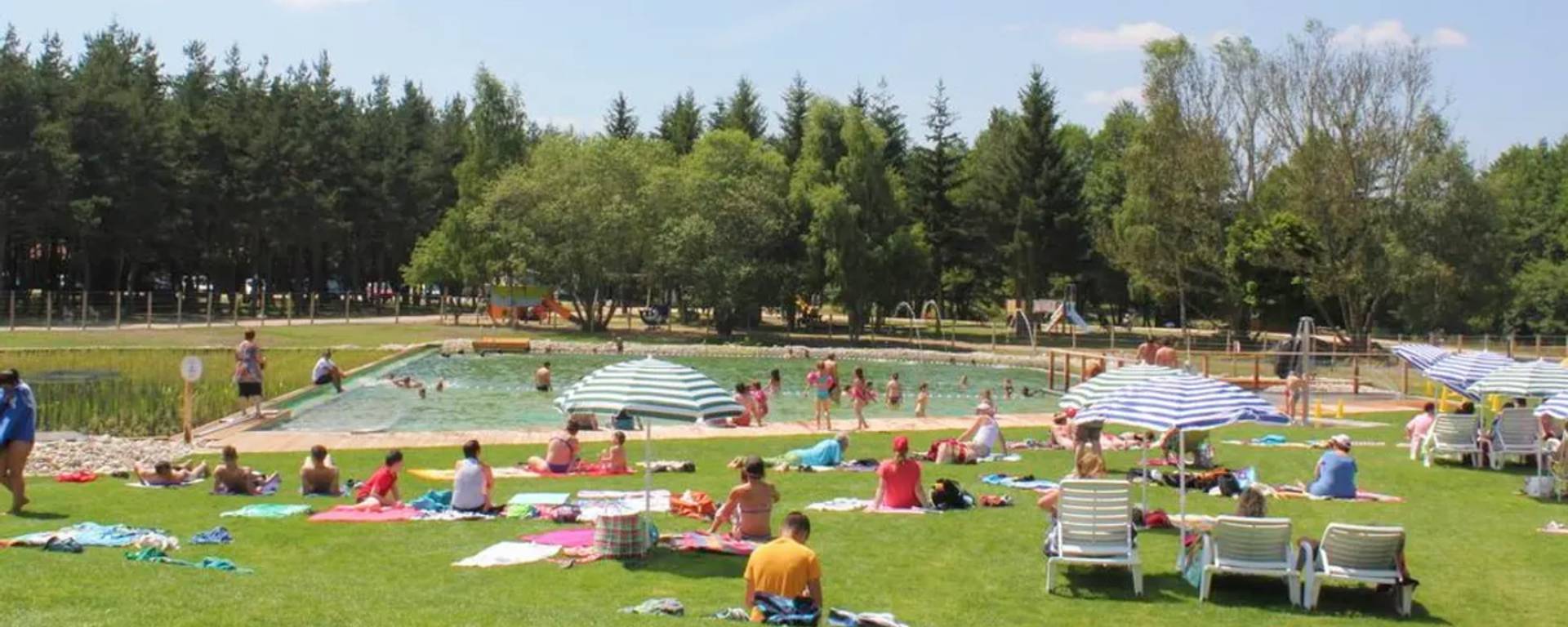
At the gateway to the Haut-Allier Gorges, Saugues – the historic capital of the Margeride region and a legendary stop on the Way of St James – harbours a little-known gem: Auvergne’s first organic swimming spot. With its legendary heritage, chlorine-free filtered water and a wild river to explore, this small town in the Haute-Loire offers a complete nature break, as rich in history as it is in opportunities to cool off.

Saugues and its surrounding area
Before we take the plunge, let’s take a look back at its history: Saugues is not just a place to swim; it is a legendary capital in the heart of a designated nature reserve.
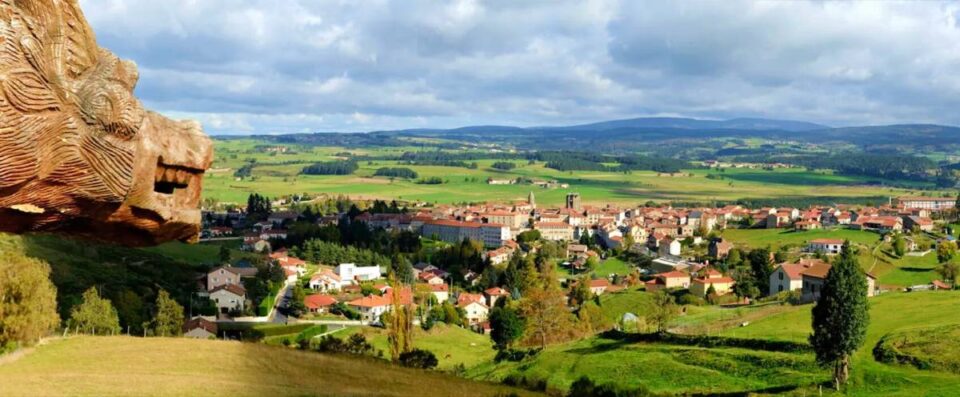
A historic capital of the Margeride region
Perched at an altitude of around 960 metres on a granite plateau, 45 kilometres west of Le Puy-en-Velay, Saugues occupies a pivotal position at the junction of three departments: Haute-Loire, Lozère and Cantal. The town has its roots in the ancient region of Gévaudan, of which it was one of the strongholds under the suzerainty of the bishops of Mende and later the lords of Mercœur, who had a castle built there in the early12th century. All that remains of this long-gone fortress today is the Tour des Anglais, a13th-century square keep which still dominates the historic centre and remains the town’s most recognisable landmark.
The history of Saugues took a dramatic turn one night in September 1788, when a fire ravaged much of its medieval centre, erasing some of the traces of its fortified past. A few decades earlier, between 1764 and 1767, the town and its surrounding area had already experienced an episode that left a lasting mark on the collective imagination: the attacks by the infamous Beast of Gévaudan, which is said to have claimed around a hundred victims in the surrounding mountains before being killed by Jean Chastel on 19 June 1767. This dark chapter in local history is now recounted at the Bête du Gévaudan Fantasy Museum, which has been open to the public since the late 1990s and has become one of the town’s must-see attractions.
Saugues also owes its reputation as a tourist destination to its location on the Via Podiensis (GR65), one of the main historic routes of the Way of St James. The town is the third stop on the route from Le Puy-en-Velay, after Saint-Privat-d’Allier and Monistrol-d’Allier, and serves as a meeting point for pilgrims arriving from both Le Puy and the Allier Valley via the Cantal or the Puy-de-Dôme. Every year, more than 20,000 walkers – whether pilgrims in the religious sense or simply hikers seeking nature and heritage – pass through the town. This influx of visitors has shaped part of the local economy, with holiday cottages, specialist accommodation and shops tailored to the needs of passing walkers.
From an economic and social perspective, Saugues retains a distinct rural character. The commune remains the centre of a tradition of sheep farming, favoured by the mountainous terrain of the Margeride, with an agro-pastoral system dating back tothe 16th century that combines extensive grazing with cereal crops around the villages. This agricultural heritage now coexists with a booming nature-based tourism sector, driven by the immediate proximity of the Allier Gorges and the GR65 hiking trail.
- Where is Saugues?
Interactive OpenStreetMap map centred on the commune of Saugues in Haute-Loire:
An exceptional natural landscape, stretching from the plateau to the gorges
The Saugues area stretches between two very distinct geographical features. On one side lies the granite plateau of the Monts de la Margeride, which rises to an altitude of 1,484 metres at the summit of Montchauvet nearby. On the other, below, lie the Allier Gorges, which plunge down to an altitude of around 600 metres, creating a striking topographical contrast over what is, all things considered, a relatively short distance. This ‘balcony’ location, on the borders of the Haute-Loire, Lozère and Cantal departments, explains why Saugues often serves as a base from which to explore a natural area far vaster than the commune itself.
The Allier Gorges proper form a canyon carved out by the river of the same name over a distance of nearly 80 kilometres between Langogne, in Lozère, and Langeac, in Haute-Loire. The Allier is regarded here as one of Europe’s last truly wild rivers, a status which explains why a large part of the valley, covering more than 16,000 hectares, has been designated a Natura 2000* site, making it the largest site of its kind in Auvergne. This environmental protection has enabled the preservation of remarkable biodiversity, including the return of the Atlantic salmon, which migrates upstream every year to spawn in the river’s fast-flowing waters.
Tourism is organised around several complementary pillars. The first is rail travel: a tourist train – either steam-powered or a railcar, depending on the package – runs from Langeac to Langogne through the gorges, offering a unique view of landscapes that are difficult to reach by car. This service operates during the season, generally from mid-May to mid-August. The second pillar is hiking, notably along the GR470, which allows you to follow the river on foot and visit several remarkable villages along the route, such as Chanteuges and its abbey, or Lavoûte-Chilhac and its Benedictine abbey. The third pillar, which is more physically demanding, centres on white-water activities.
Landmarks
- Saugues has an average altitude of around 960 metres, with local variations ranging from 661 to 1,485 metres within the municipal area.
- More than 16,000 hectares designated as Natura 2000 sites across the Allier Gorges and its tributaries.
- Around 80 kilometres of gorges between Langogne and Langeac.
- More than 20,000 walkers and pilgrims are welcomed each year on the Via Podiensis near Saugues.
The natural swimming spot at Saugues
Here’s the crux of the matter: a pioneering swimming spot in Auvergne, where the water is filtered naturally, without any chemicals, and is open to everyone.
A pioneering concept in Auvergne
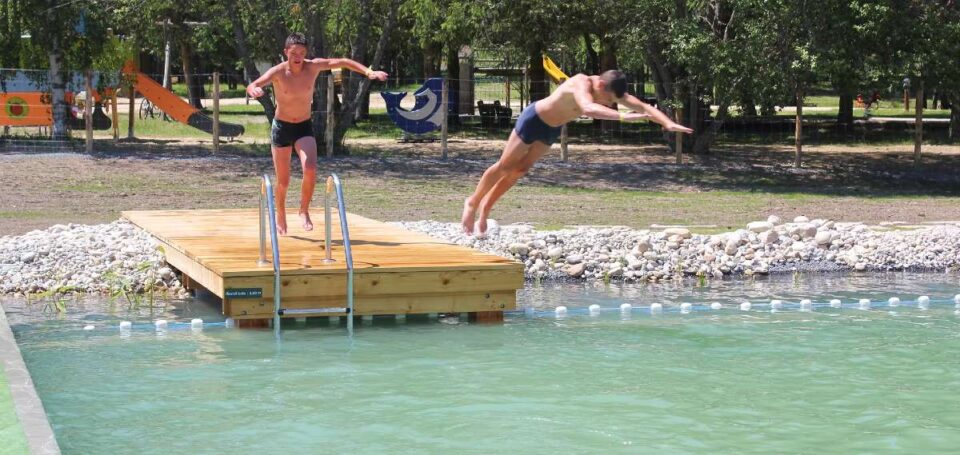
A far cry from the usual standards of municipal swimming pools, the natural swimming pool in Saugues is based on a simple principle that was rare in the region at the time of its creation: entirely natural water filtration, without the use of chlorine or any other chemical treatment products. The town claims to be a pioneer in Auvergne for this type of facility, which forms part of a wider trend towards eco-friendly swimming seen elsewhere in France, particularly in mountainous areas.
The site comprises several pools of varying depths, designed to cater for all visitors. The first area, the smallest of the three, serves as a shallow play area suitable for young children, with a depth of around 55 to 60 centimetres. Next comes a medium-sized pool measuring 218m², with a depth of 1.50 to 1.60 metres, followed by a large pool measuring 295m² where the water reaches a depth of up to 2 metres. This progression in depth allows the facility to cater for families – from accompanied toddlers to more experienced swimmers – all in the same venue.
The complex is complemented by a grassy beach, designed for relaxation and leisure, as well as accessibility features to facilitate access for people with reduced mobility. The natural swimming area forms part of the wider Seuge leisure centre, managed jointly by the local council and the neighbouring campsite, around 500 metres from the centre of Saugues. This close proximity to the town centre makes it an easy stop to combine with a visit to the historical heritage sites mentioned earlier.
Terms of access, admission charges and rules for visitors
The natural swimming area operates on a tight schedule, timed to coincide with the peak summer season. The site is open every day from 1 July to 31 August, from 12 noon to 7 pm, with lifeguards on duty throughout these hours. Outside this period, the Saugues municipal swimming pool* takes over between autumn and spring to provide an indoor swimming facility.
The pricing structure distinguishes between several visitor categories. The full price applies to adults, whilst a reduced rate applies to children aged 5 to 17, people with reduced mobility and guests staying at the Seuge campsite. Entry is free for children under 5, and a group rate applies to leisure centres, school groups and community centres, subject to booking. A special offer is available to campers staying on site for at least one week, who are entitled to a free introductory visit.
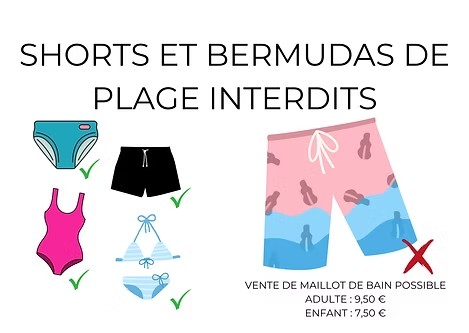
The site’s regulations impose a number of specific rules, in line with the principles of a natural swimming area. Swimwear is compulsory, whilst beach shorts and Bermuda shorts are explicitly prohibited – a measure designed to limit the introduction of external particles into the biological filtration system. The planted bank areas, which play an active role in the natural purification of the water, are off-limits to bathers, and animals are not permitted anywhere on the site.
Guidelines for natural swimming
- Three main pools, ranging in depth from 55–60 centimetres to 2 metres, depending on the area
- A large swimming pool measuring 295 square metres, the largest of the three swimming areas
- A pricing structure ranging from free admission for children under 5 to the full adult price
- Open for a limited period of two full months, July and August, with daily sessions lasting 7 hours.
- The official website for natural swimming, water sports and activities:

Other water features and water-based leisure activities nearby
Natural swimming is just the start: a whole range of water-based activities rounds off the offering around Saugues and in the Allier Gorges.
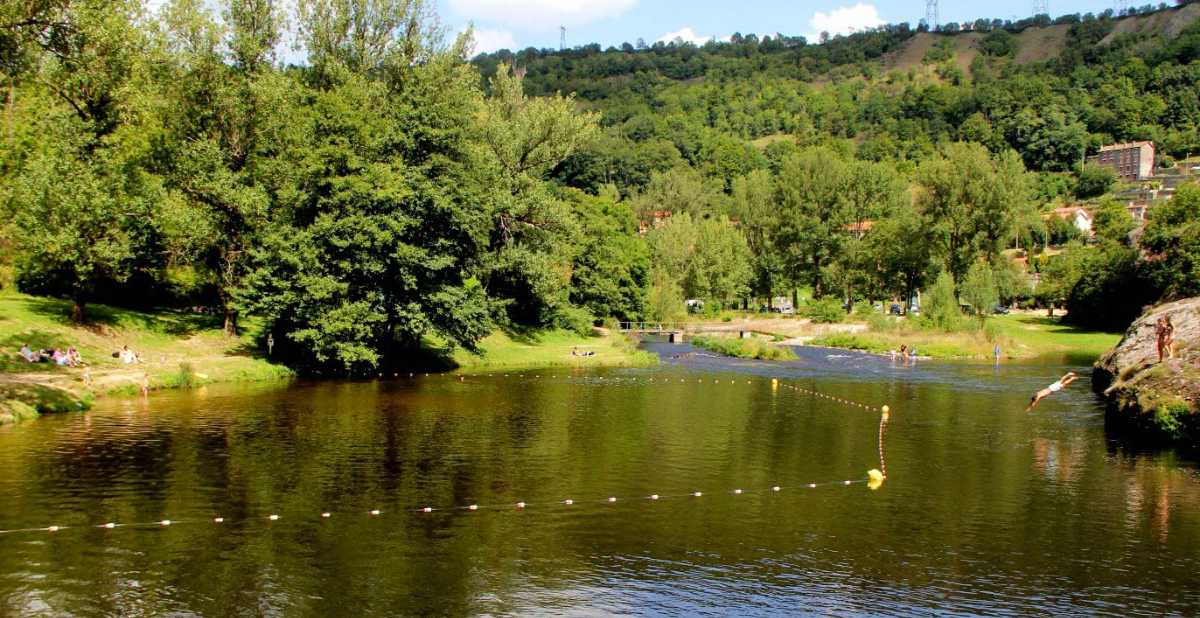
The Seuge Leisure Centre, a multi-purpose venue
As well as being a place for swimming, the Seuge lake is a leisure destination in its own right, designed for families as well as those seeking more adrenaline-fuelled activities. Depending on the season, the site offers water ski lifts, stand-up paddleboarding, tubing and pedalos – generally available from May to October – in addition to fishing, which is permitted in part of the lake. This variety of activities allows the site to operate over a significantly longer period than just natural swimming, which is only available during the peak season.
The adjoining three-star campsite forms part of the town’s accommodation offering. It offers both camping pitches and Clévacances-certified chalet rentals, with a total capacity of around a hundred pitches, depending on the layout chosen.
The estate also boasts a range of additional sports facilities, including an equestrian centre situated around a hundred metres away, as well as tennis courts, volleyball and basketball courts, not to mention trails suitable for mountain biking, whether with or without electric assistance. These facilities help to spread tourist numbers across a range of activities, reducing the pressure on the single natural swimming area during busy periods.
Unlike natural swimming, which has a very limited season, La Seuge campsite operates over a much longer period, generally from early spring to late autumn, making it a convenient base for visitors wishing to explore the area outside the months of July and August.
The River Allier: from wild swimming to white-water sports
The area isn’t limited to Saugues and its leisure centre. A few kilometres away, the River Allier itself offers more unspoilt swimming opportunities, particularly near Monistrol-d’Allier and Alleyras, where stretches of crystal-clear water attract visitors seeking a more natural setting than that of a developed swimming area. These sites generally lack the supervision and facilities found in Saugues, which means bathers need to be extra vigilant, particularly regarding the current and the varying depth of the riverbed.
The sector has also developed a strong range of white-water sports. Several operators, based mainly in Lavoûte-Chilhac and around Langeac, offer canoeing, kayaking or rafting trips on routes ranging from 12 to 17 kilometres depending on the section chosen, lasting from an hour and a half to a full day. Prices range from around 25 euros for a single kayak hire on a short route to nearly 68 euros per person for a full day of white-water activities, including various types of craft and technical support. Some operators also offer additional activities such as hydrospeed or tubing, which provide a more physically demanding way to experience the river, focusing more on thrills than on a simple leisurely paddle.
The Allier Gorges tourist train, previously mentioned for its heritage value, also plays a role in providing access to these swimming and water-based leisure areas. In particular, it provides easy access to starting points for walks or swimming in Monistrol-d’Allier or Alleyras, without the need for a private car, making it a practical option for visitors arriving without a car or wishing to limit their use of motorised transport in the area.
Guidelines for water-based activities
- The River Allier and its tributaries.
- Canoe and kayak route between Langeac and Lavoûte-Chilhac
- Water sports (hydrospeed, canyoning, tubing)
- The Seuge’s natural swimming area is open for two months a year
- Water sports on the Seuge lake from May to October.
With its medieval heritage, its location on the Way of St James and the variety of its water features, Saugues is a fine example of the richness of a region where history and nature are in constant harmony. Natural swimming, with its clear ecological focus, remains a local speciality well worth a visit, but it is just one of many gateways to a much wider range of water-based leisure activities, spanning the entire Haut-Allier Gorges.
Where to stay in Saugues and Margeride?
Are you looking for a hotel, a holiday let, a B&B or other accommodation in Saugues and the surrounding area? Use our handy search tool – with map and list views – to find somewhere to stay for the night or for a longer stay:
Cars and Buses in Haute-Loire
And if you’re travelling from Saugues by bus, take the H04 and H10 services to Brioude and Le Puy-Velay:
Travel link