

Situated between the Rhône Valley, the Ardèche Gorges and the Drôme plains, the 26+07 region boasts one of the densest cycle networks in south-eastern France. Here’s an overview of the must-see routes, from the flatlands of the Rhône to the peaks of the Ardèche, via the Drôme Valley.

Cycling in Drôme and Ardèche
270 kilometres of safe cycle paths, the Ardéchoise and the Ardèche Mountain Bike Trail, 3,600 kilometres of signposted road cycling routes in the Drôme, and running through it all, the Via Rhôna, which links the region from north to south along the course of the River Rhône.

The ViaRhôna along the River Rhône
The ViaRhôna (815 km in total, EuroVelo 17*) runs through the two-department region for 160 kilometres along both banks of the River Rhône.
The Ardèche sections are fully mapped out, covering approximately 90 km divided into 5 sections that can be adapted to suit your journey, alternating with approximately 70 km on the left bank of the Drôme:
- From Sablons in Isère (opposite Serrières) to Tournon-sur-Rhône(Ardèche, 07)
- From Tournon-sur-Rhône to Valence (Drôme, 26)
- From Valence to Le Pouzin (07)
- Le Pouzin in Châteauneuf-du-Rhône(26) and Viviers (07)
- From Viviers to Bourg-Saint-Andéol (07) and Pont-Saint-Esprit (Gard, 30)
The route through the Drôme and Ardèche is flat, suitable for families and can be combined with train travel and the stations in the Drôme, Gard and Isère departments. There are numerous greenways to explore along the route, such as the Dolce Via in the Eyrieux Valley, which is served by a bus route with bike racks.
➡ Routes E05 and E12 in the Ardèche, in the Eyrieux Valley
Top tip: watch out for gusts in the Rhône Valley; they’re common, particularly with the Mistral – a wind renowned for its ferocity and gusts – which blows in from the north. When the Mistral is blowing, it’s best to head downhill with the wind behind you!
➡ Weather in Drôme and Ardèche
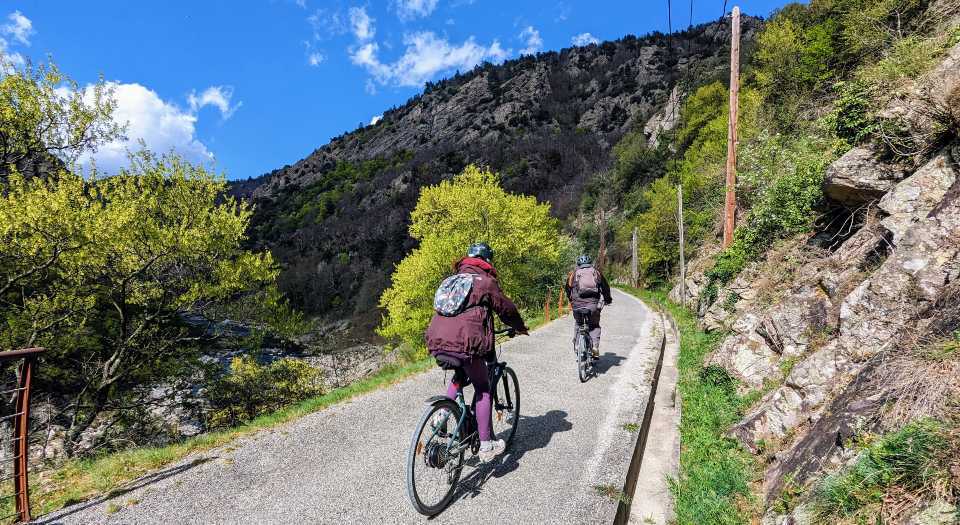
160 km along the river in Drôme-Ardèche
Among Europe’s major cycle routes, the ViaRhôna holds a special place. Linked to the EuroVelo network as route 17, it stretches for 815 kilometres between Lake Geneva and the Mediterranean, following the course of the river and continuing on from the Rhône route* in Switzerland.
The Drôme and Ardèche departments share around 160 kilometres of this unique route, representing over 20 per cent of the total length. The route stretches along both banks, which it crosses several times as it follows the course of the river and the various stages, from Saint-Rambert-d’Albon (Drôme) in the north to Bourg-Saint-Andéol ( Ardèche) in the south.
A route that alternates between the two banks
What makes this section of the ViaRhôna so special is its geography: the River Rhône, once a border, now links the two departments, with the route regularly switching from one bank to the other.
On the Drôme side, around 67 km of cycle routes run along the left bank, comprising 52 km of fully protected cycle paths and 15 km of shared cycle routes. On the Ardèche side, the 90 km of developed route on the right bank is divided into several distinct sections between Haut-Vivarais and Bas-Vivarais.
Together, these form a continuous, signposted cycle route that can be used for a few hours, for a day, or as part of a multi-day tour.
As for the elevation profile, it is remarkably flat, with the total elevation gain never exceeding 60 to 80 metres over a single stage: this is precisely what makes this section in the Drôme and Ardèche one of the most accessible in France for families with children, occasional cyclists and e-bike riders wishing to cover long distances without becoming unduly tired. It is worth noting that cycling downstream, from north to south, is easier, particularly when the Mistral is blowing in the Rhône Valley.
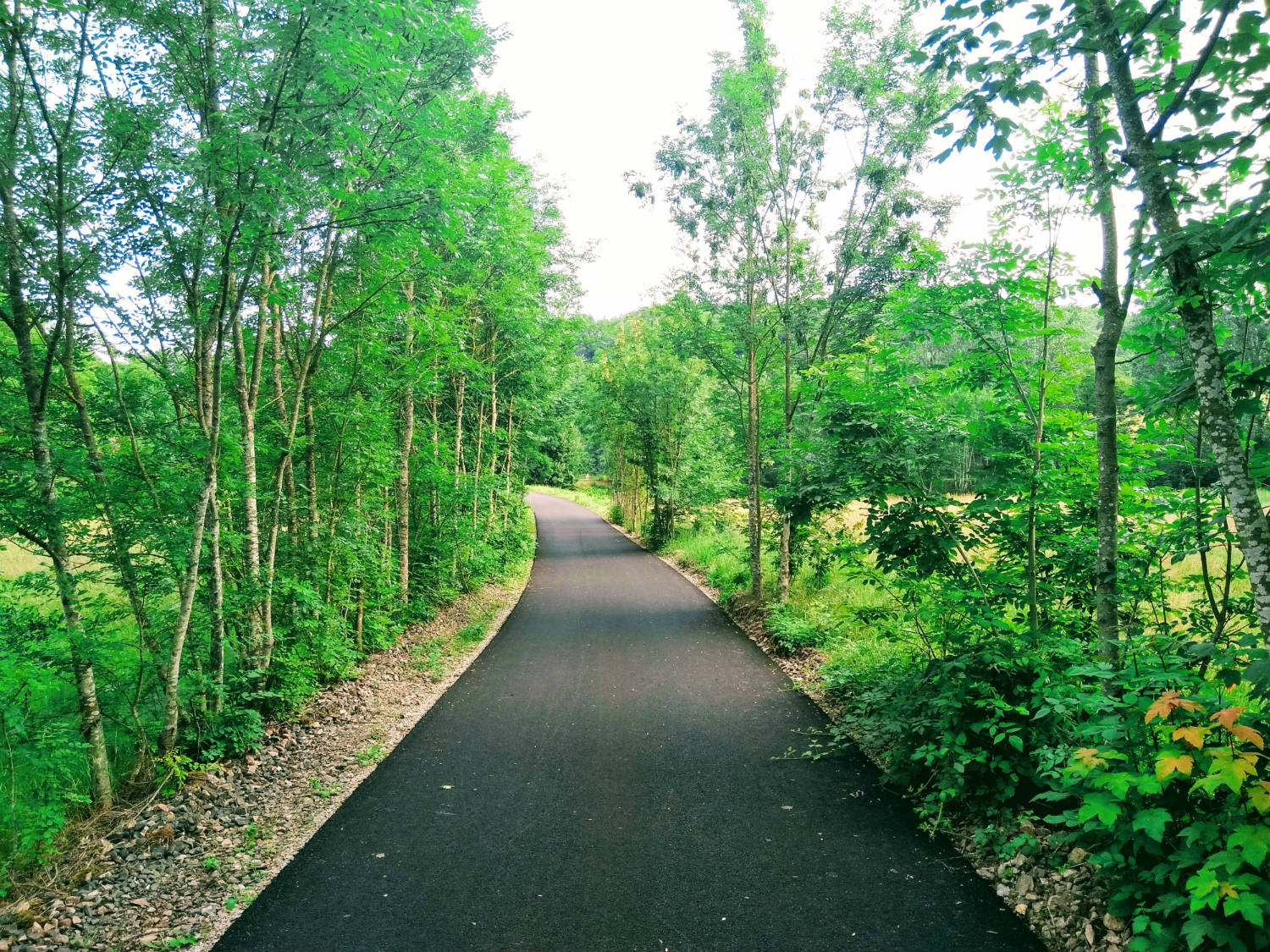
The sections in the Drôme
The five stages in the Drôme follow one another from the department’s northern border to Pont-Saint-Esprit:
- Sablons → Sarras
- La Roche-de-Glun → Valence
- La Voulte-sur-Rhône → Le Pouzin
- Châteauneuf-du-Rhône → Viviers
- Bourg-Saint-Andéol → Lapalud
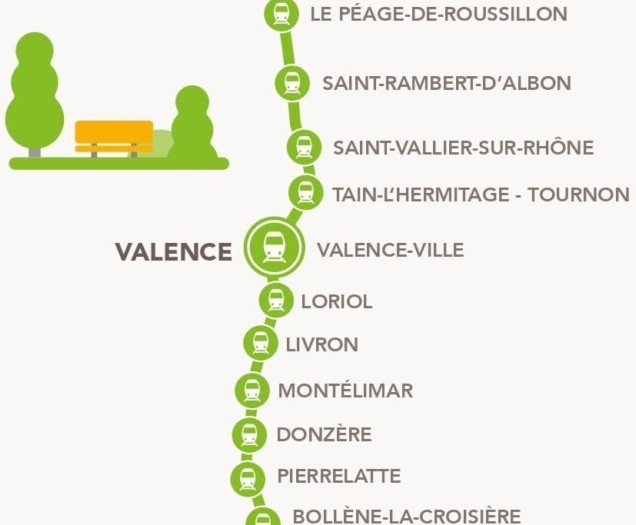
Valence is the central hub of the Drôme cycle route. The town has a TGV and TER station directly connected to the route, making it a starting or finishing point for cyclists combining train and cycle travel. To the north, Péage-du-Roussillon station, on the border between the Drôme and Isère departments, has a regional TER station.
Between Valence and Montélimar, the 62-kilometre stretch runs alongside the river through a agricultural plain dotted with orchards, villages and hamlets.
The stage from Pouzin to Châteauneuf-du-Rhône, the longest on the Drôme route (around 40 km), can nevertheless be completed in under three hours at a leisurely pace.
The stages in the Ardèche
In the Ardèche, the ViaRhôna stretches for 90 km, divided into four sections. The route alternates between the banks of the Rhône and sections further inland, passing through a succession of villages and heritage sites rarely visited from the main road, the D86* departmental road:
- Sarras → Glun
: the vineyards of Condrieu and Saint-Joseph; Romanesque villages; the first historic suspension bridges in the north of the Ardèche, including the Marc Seguin* footbridge between Tain and Tournon. - Soyons → La Voulte-sur-Rhône
The cliffs of Soyons, prehistoric caves and panoramic views of the river. - Le Pouzin → Rochemaure
: an alluvial plain, with Rochemaure Castle towering above, and a restored Himalayan-style footbridge* spanning the river – a suspension walkway over the Vieux Rhône* where you have to dismount from your bike. - Viviers → Bourg-Saint-Andéol
Viviers, a listed medieval episcopal town, and the Rhône plain in the southern Ardèche, which already has a Mediterranean feel thanks to its flora and light.
The Rochemaure* footbridge deserves a special mention. Built on the piers of the old bridge dating from 1842, it offers a suspended crossing over the Rhône which, in itself, encapsulates several centuries of history relating to the crossing of the river, including traces of the old cable ferry. It is a must-see on the Via Rhôna.
A diversity of heritage and landscapes
Along the entire length of the route, which spans two departments, the ViaRhôna winds its way through the vineyards of the northern Rhône Valley (Crozes-Hermitage, Cornas, Saint-Péray, Saint-Joseph*) and a succession of historic towns that have thrived around and thanks to the river: Tournon-sur-Rhône in the Ardèche and Tain-l’Hermitage in the Drôme face each other across the river, linked by a19th-century suspension bridge. Viviers has retained its medieval centre, whilst Bourg-Saint-Andéol – a Roman town that became a centre for bargemen – marks the end of the Ardèche leg of the journey.
Cycling along the water’s edge also means witnessing the changing biomes: the vegetation gradually changes to a Mediterranean type as you head south; the poplars and alders of the Valence plain give way to holm oaks and the first olive trees on the outskirts of Montélimar and Viviers.
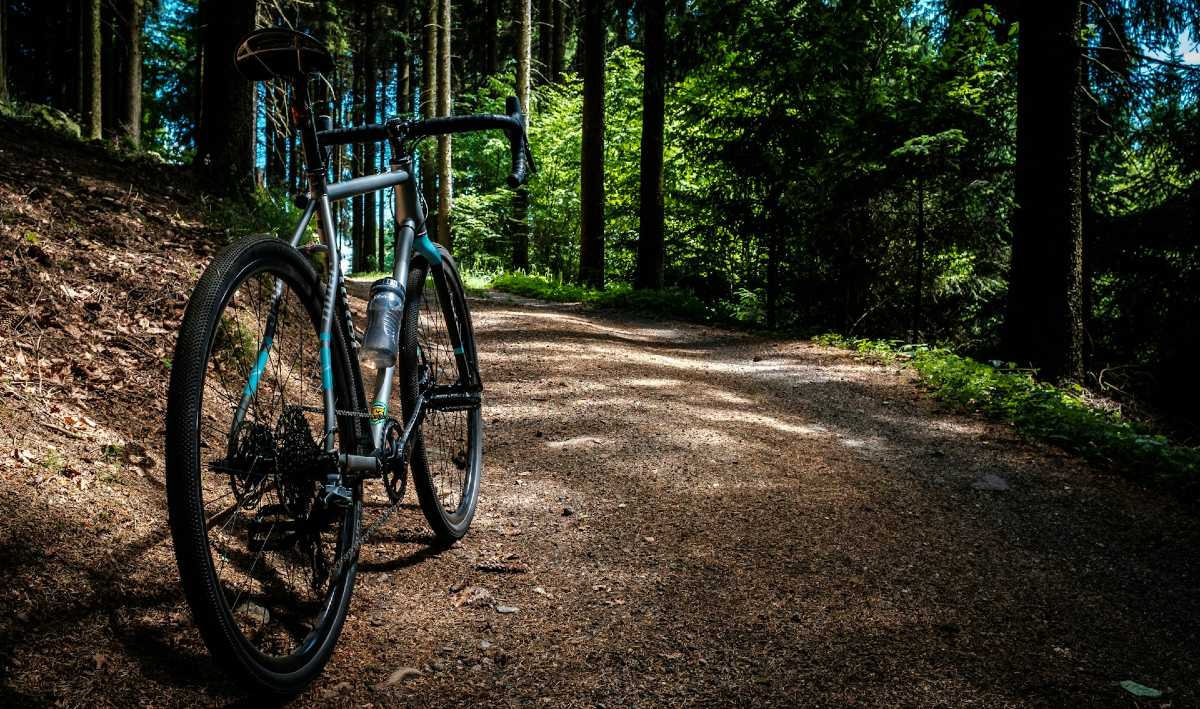
Cycle routes and cycle traffic
The ViaRhôna is not an isolated route: in Drôme-Ardèche, it acts as the backbone from which most of the region’s cycle routes and greenways radiate out:
- The Vélodrôme* starts from a footbridge directly linked to the ViaRhôna, near Livron-sur-Drôme.
- The Dolce Via* in the Eyrieux Valley in the Ardèche joins the Rhône route at La Voulte-sur-Rhône.
- The Via Fluvia* connects to Sarras via the Tourtel road (D270), running alongside the Cance Valley.
- The Via Ardèche*, with a connection via Le Teil in summer 2026. Please note: for the link to the Via Rhône, choose the Chemin de la Ballastière if possible, as the N102 national road is very busy and not particularly well suited to cyclists.
- The Jabron Valley Greenway in Montélimar, a 20-kilometre route to La Bâtie-Rolland.
This network-based approach makes it possible to put together day trips or bespoke itineraries combining several modes of transport, depending on the route.
And when it comes to travelling from one place to another, the train-and-bike combination remains the most convenient option for day trips. The stations at Valence, Tournon, Montélimar and La Voulte-sur-Rhône are directly accessible from the route.
Booking a bicycle space on TER trains is compulsory on all routes in the Auvergne-Rhône-Alpes region:
- At weekends, on public holidays and on 15 May in May, June and September
- Every day in July and August.
It’s best to plan ahead and book your space, particularly in summer, via the dedicated SNCF Voyageurs website, ‘Vélo àBord’↗, in addition to yourTER↗ ticket.
As for railway stations, from north to south across the Drôme+Ardèche region, there are several stations and stops, as well as those in the Drôme, with additional stations in Isère and Vaucluse:
Practical information on the ViaRhôna
Here is some practical information about the ViaRhôna in Drôme and Ardèche, in a few lines:
- An easy route, except when the Mistral 🌬 is blowing; suitable for everyone, including families with young children.
- Recommended distances: 20 to 35 kilometres a day on a family walking holiday
- Best time to visit: possible all year round, though the weather is milder between April and October. May–June and September offer the best conditions (moderate temperatures, fewer tourists).
- Accommodation: The Accueil Vélo* network offers accommodation options along the entire route, including in Valence, Tournon, Montélimar and Viviers. A map of hotels and holiday lets in theDrôme↗ andArdèche↗ rounds off the range of options.
- There are also two seasonal bus routes in the Ardèche with bike racks, allowing you to follow the Dolce Via to Lamastre or Saint-Agrève from the Rhône Valley.
Cycling map of Drôme and Ardèche
And to round off the geography section, here is the interactive map covering both departments, showing greenways and cycle routes, the main mountain bike trails, SNCF railway stations and nearby buses with bike racks:
Travel link
- EuroVelo 17: The ViaRhôna
- The Rhône CycleRoute in Switzerland
- Departmental road D86 in Ardèche
- The Marc Seguin Footbridge over the River Rhône
- The Himalayan footbridge at Rochemaure in southern Ardèche
- AOCs and wines of the Rhône Valley
- The N102 national road in France
- Cycling in the Drôme
- Bicycles, cycle paths and greenways in the Ardèche
- The Old Rhône,Wikipedia↗