
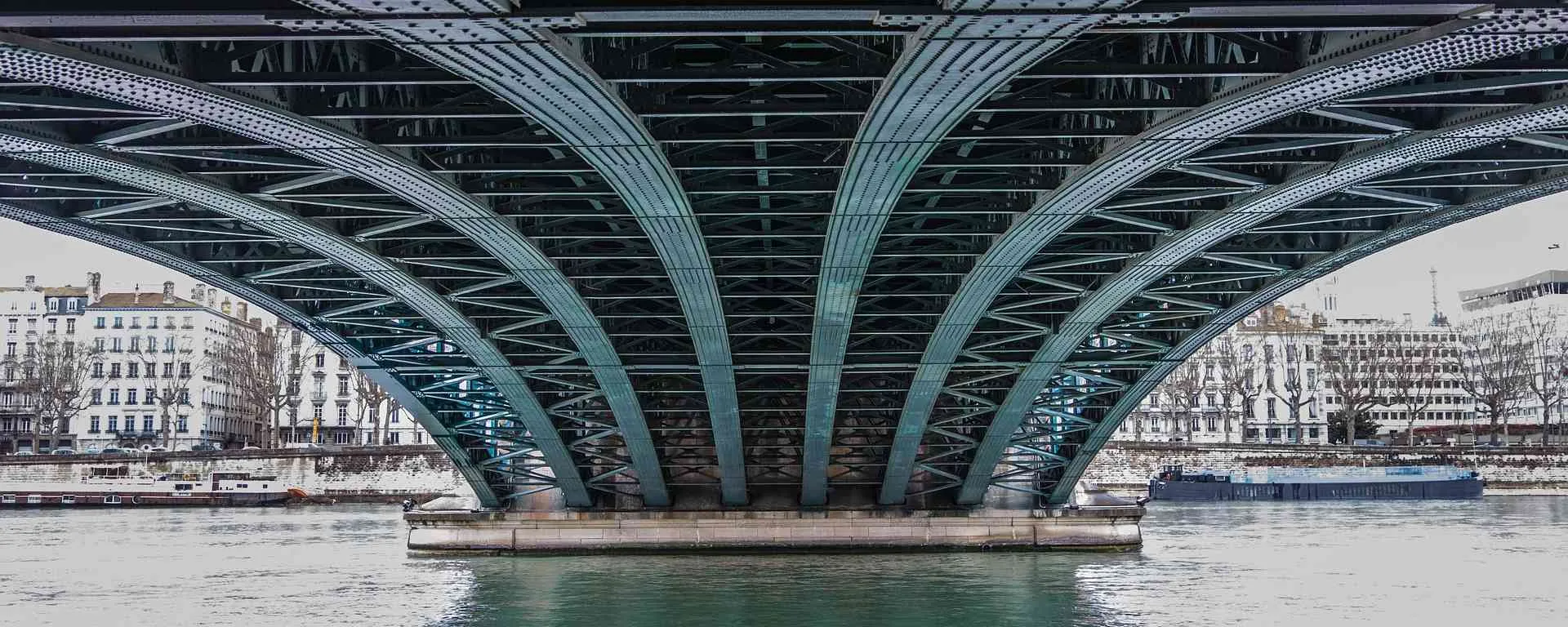
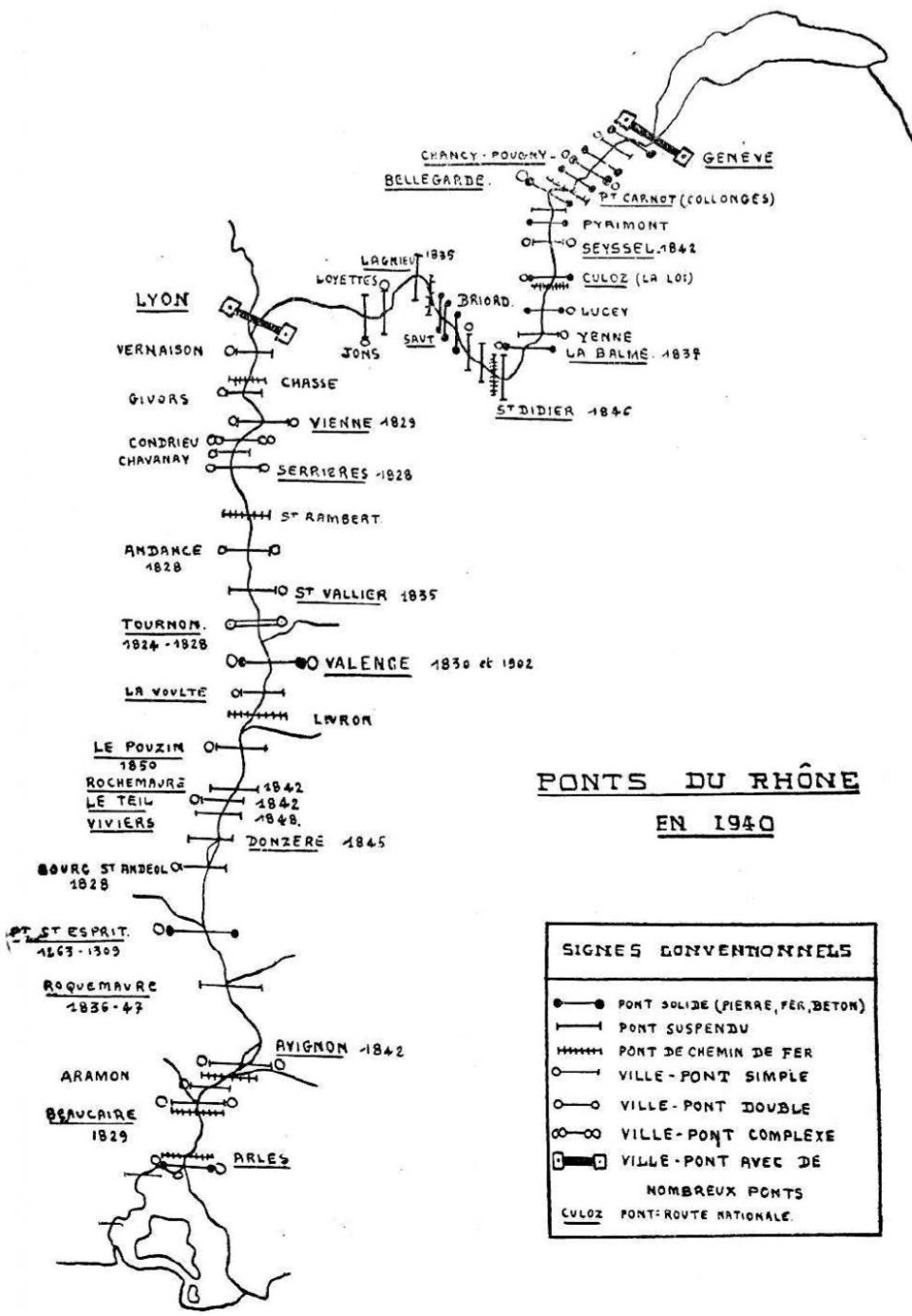
A closer look at a study in human geography: ‘The Bridges of the Rhône’ by Abel Chatelain, or how to discoverthe history and development of river crossings on the Rhône over time.

The geographical significance of the bridges over the Rhône
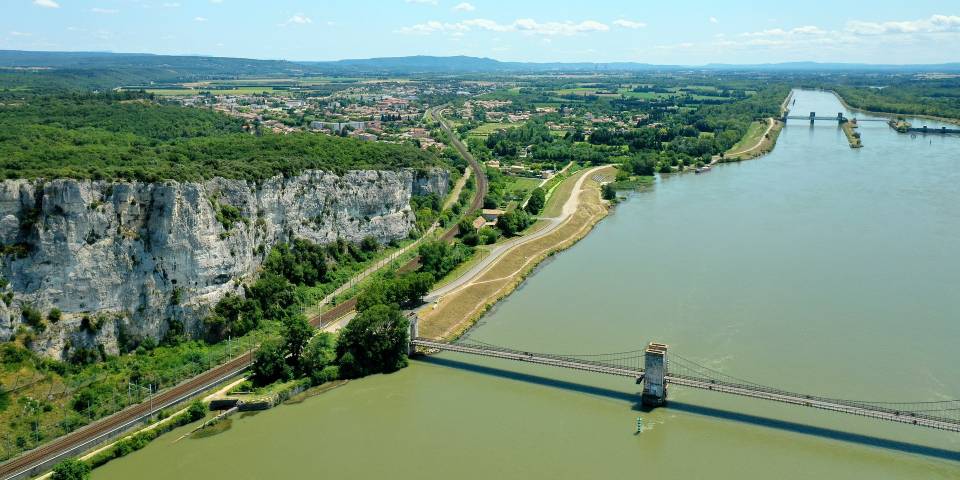
The bridges over the Rhône offer a fascinating journey through the river’s history, providing impressive examples of howarchitecture and construction techniques have evolved over the centuries.
These engineering structures have played a major role in the development of land transport links between the two banks and in the economic growth of the surrounding regions.
The gradual development of bridges across the river made it possible to link regions such asAuvergne and the Alps, Languedoc and Provence, thereby promoting the economic and demographic growth of these areas.
Furthermore, the bridges made it easier to reach major cities such as Lyon, Avignon and Arles.
Today more than ever, from hydroelectric dams and power stations to road bridges and railway viaducts, they are a key part of the economy and of transport between the two banks of the River Rhône.
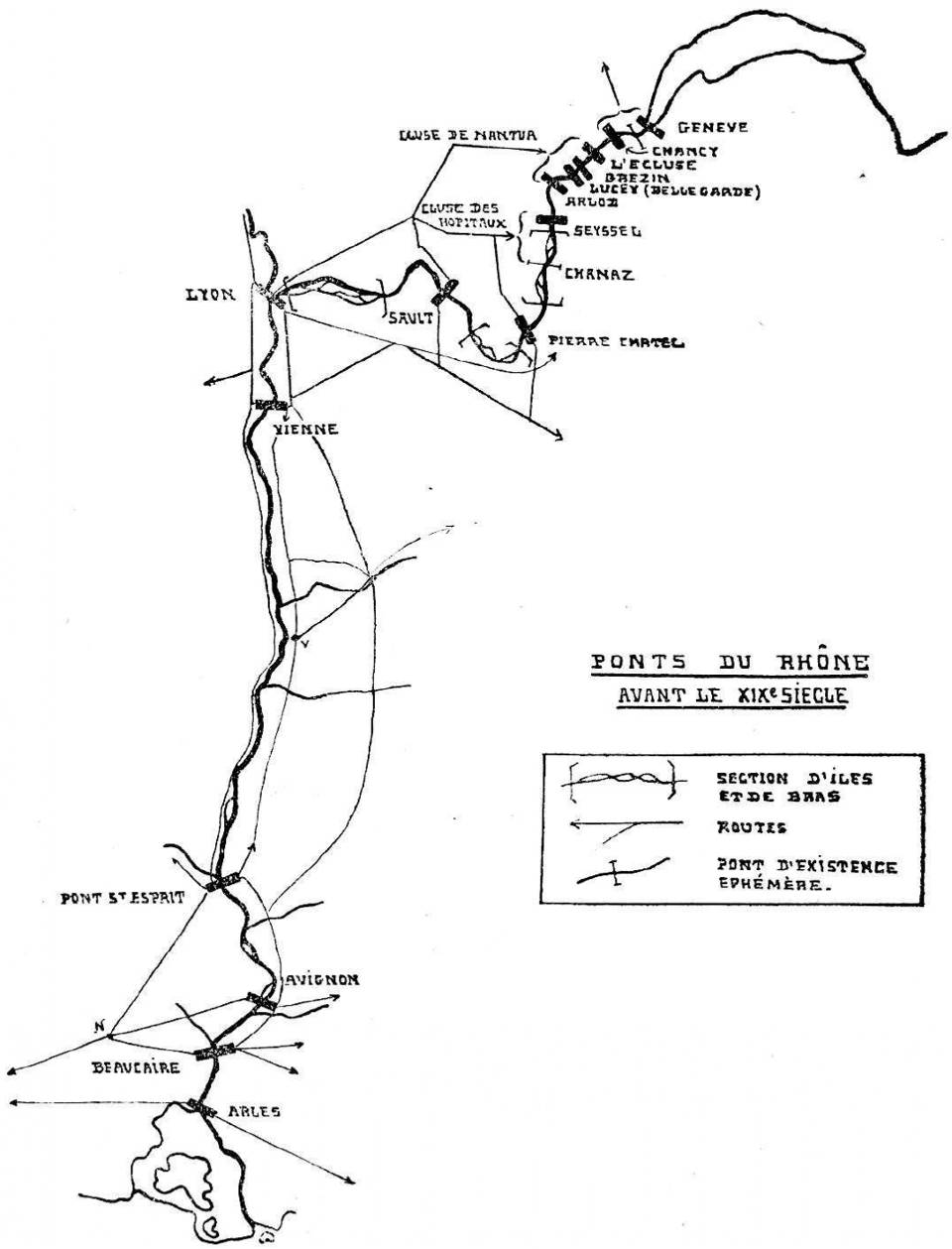
Crossing the Rhône in Antiquity and the Middle Ages
Fromancient times onwards, the crossings over the Rhône were of strategic importance in linking the various Roman provinces, even though most journeys were made in flimsy boats. The first bridges were often built of wood and stone, thus enabling the river to be crossed more reliably.
In the Middle Ages, the development of bridges and ferries revolutionised travel. These key infrastructure projects facilitated trade, strengthened links between regions, and thus drove economic and cultural development along the river.
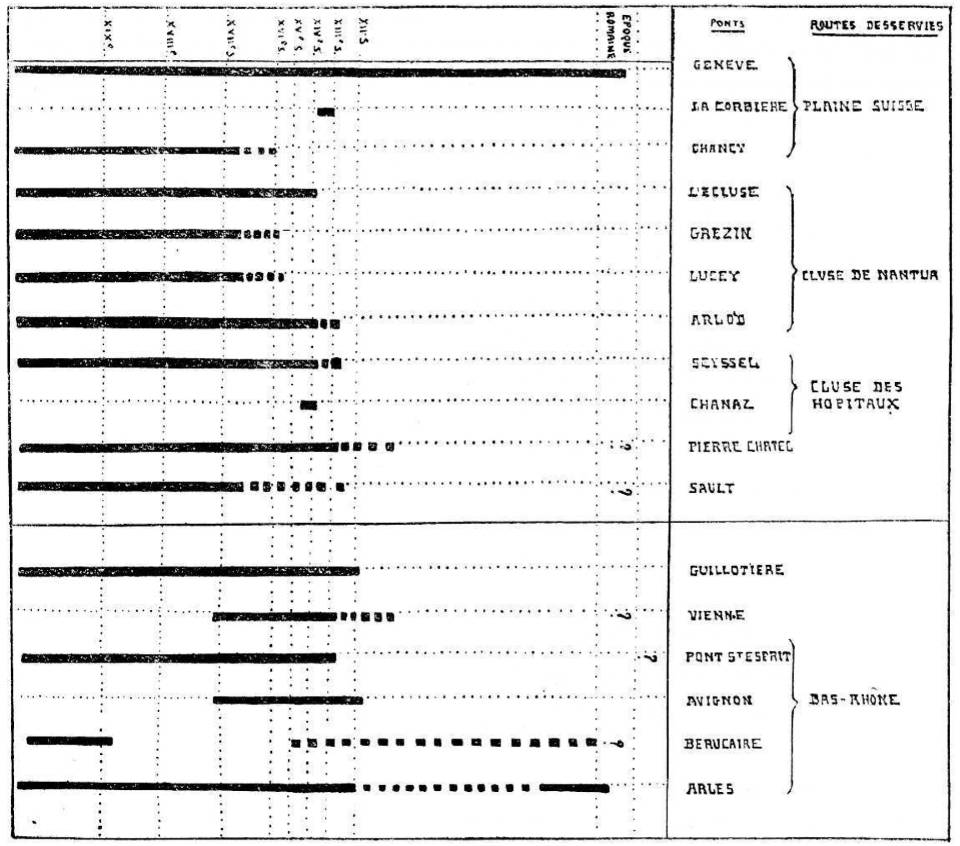
Abel Chatelain and his study of the bridges over the Rhône
Abel Chatain was a 20th-century geographer. In this article, published in 1944, he analyses the geographical challenges posed by the River Rhône, describing the first attempts to cross it in rudimentary boats in ancient times.
He then exploresthe emergence of bridges and ferries in the Middle Ages, highlighting their impact on regional connectivity, trade and socio-cultural dynamics.
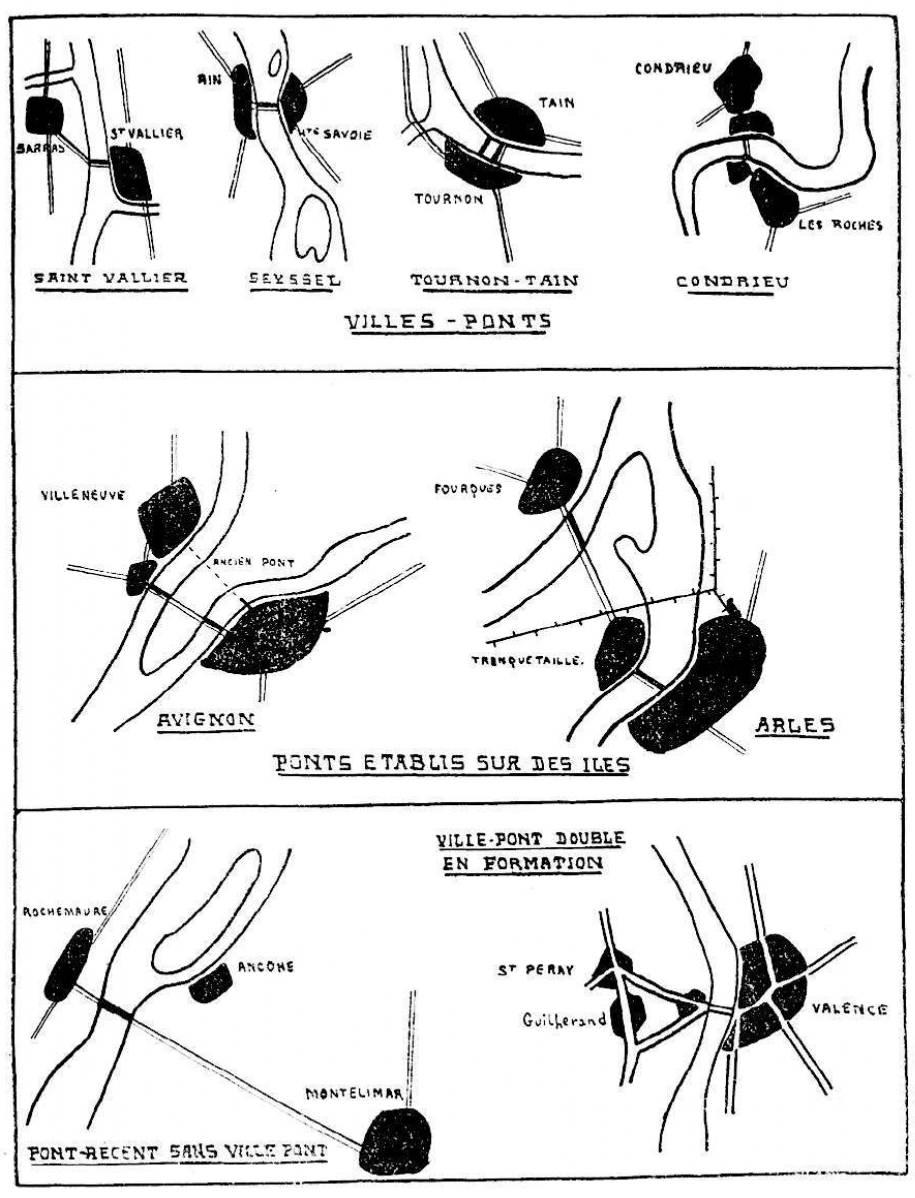
His study pays particular attention to the geographical contexts of the various bridges, examining their strategic positioning along the river and their implications for the development of the surrounding areas.
Abel Chatelain highlights the geographical choices made by bridge builders, topographical constraints, and geopolitical changes that have influenced the construction and use of bridges.
The author also exploresthe impact of these crossings on human activities, highlighting how changes in the means of crossing have shaped the economic, social and cultural dynamics of the communities living along the banks of the Rhône.
The Saint-Bénezet Bridge in Avignon: A striking example
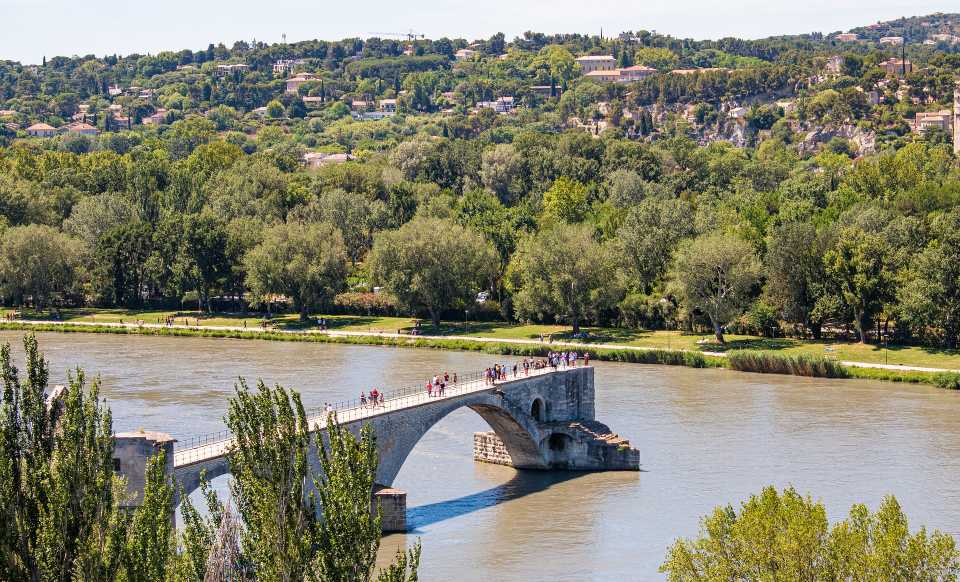
Of the many bridges spanning the Rhône, the Saint-Bénezet Bridge in Avignon deserves special attention. Built in the 12th century, this iconic structure is famous for the legend surrounding Saint Bénezet, a young shepherd from the Ardèche who had a divine vision instructing him to build a bridge.
The Avignon Bridge, a testament to medieval engineering, was built in Avignon between 1177 and 1185. Originally comprising 22 arches, it was extended in the13th century to a total of 25 arches along its 920-metre curved span.
A victim of the Rhône’s floods and the ravages of war, the bridge sustained significant damage over the centuries. In 1668, a flood swept away a large part of the structure, sealing its fate.
Today, only four arches remain, but the Pont Saint-Bénezet remains an iconic symbol of Avignon’s heritage, offering a fascinating insight into the complex interplay between people and the landscape along the Rhône.
The bridges over the Rhône today
Today, the bridges over the Rhône continue to play a vital role in modern society. They link the departments and towns situated along both banks of the river, thereby contributing to the region’s economic vitality.
Some historic structures are also preserved and promoted for their heritage and tourist value, such as Marc Séguin’s suspension bridge at Tournon-sur-Rhône or the Himalayan footbridge at Rochemaure.
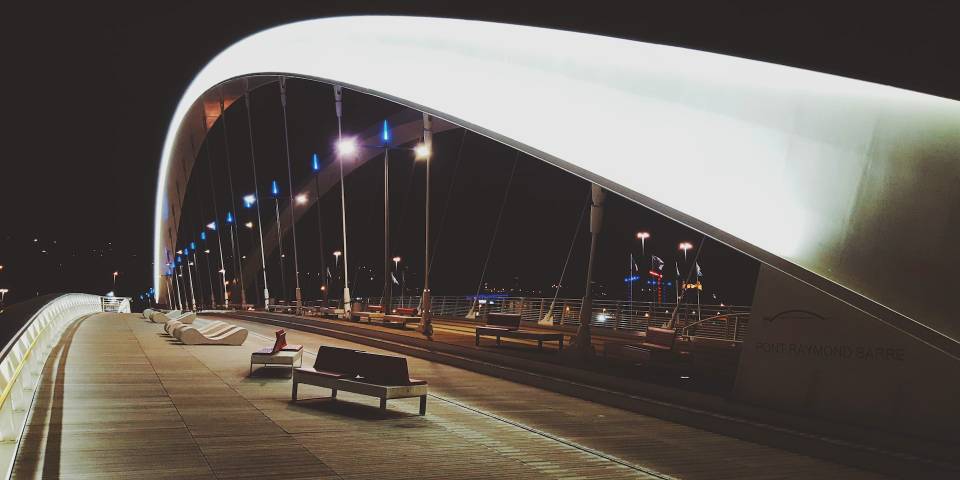
The existing bridges over the Rhône reflect the delicate balance between urban development and environmental conservation. Some, such as the Raymond Barre Bridge in Lyon, symbolise modernity, whilst others, such as the Pont du Robinet in Viviers, retain a traditional aesthetic due to their age.
The bridges over the Rhône thus bear witness tothe evolution of architecture and building techniques over the centuries, whilst offering a fascinating insight into the history of the regions they span.
When contemplating these remarkable engineering feats, one cannot help but feel a sense of wonder and respect for the builders who managed to overcome incredible technical and architectural challenges.
Thus, the bridges over the Rhône are not merely historical artefacts or feats of engineering. They tell the story of a region’s geographical, economic and cultural evolution. Rooted in the past, these structures continue to write the history of the Rhône – a chapter of human connection along the river’s course.
Abel Chatelain’s study
Read Abel Chatelain’s full study of the bridges over the Rhône:

Travel link
- List of bridges over the Rhône, Wikipedia
- Bridges in Auvergne-Rhône-Alpes ↗
- Who is Abel Chatelain? ↗
- Bridges in the PACA region ↗ and ↗
- Study of crossing points and infrastructure developments along the Rhône in the Provence-Alpes-Côte d’Azur region ↗
- The Saint-Bénézet Bridge, Wikipedia
- Fancy a weekend in Avignon?